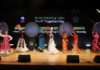

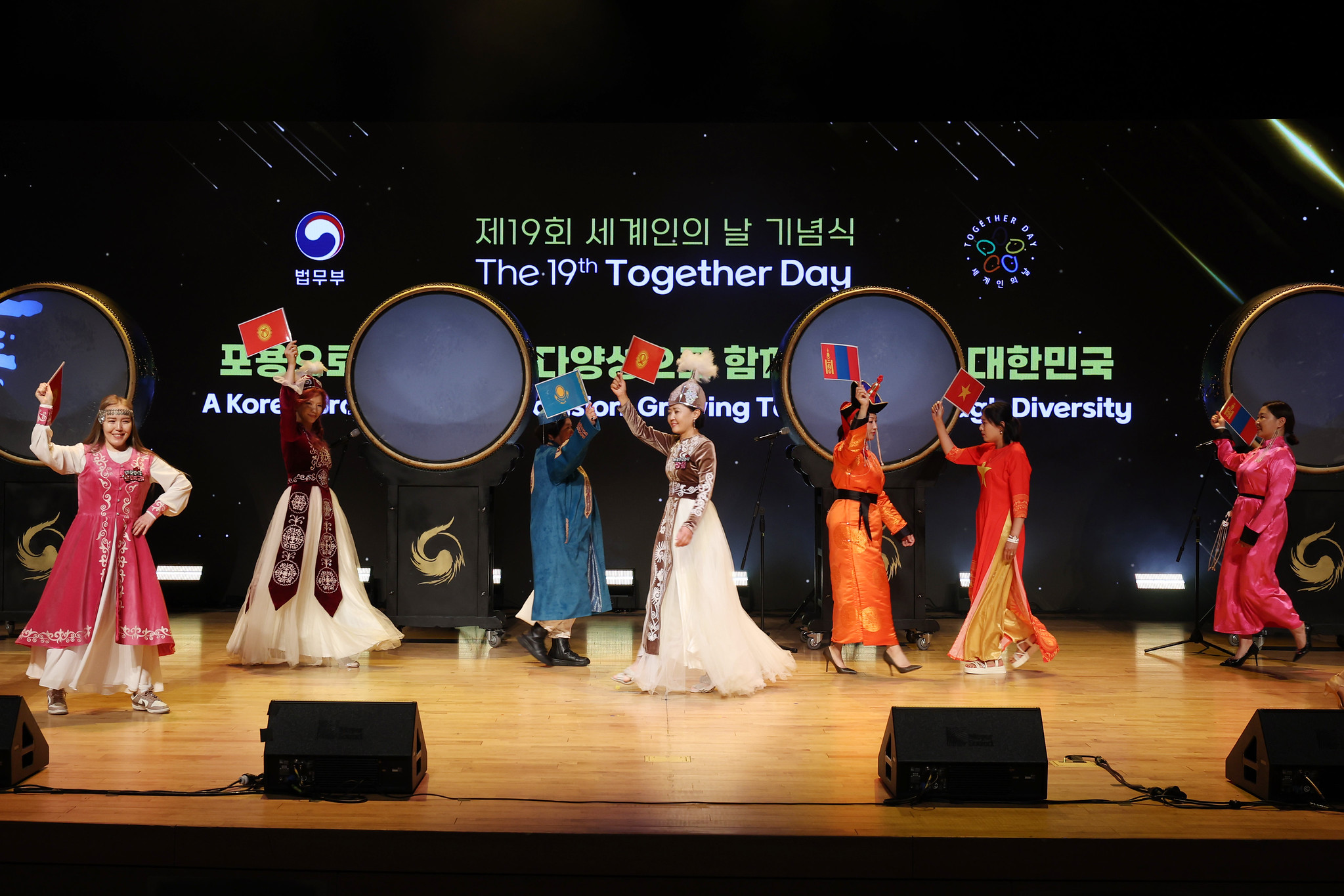
A ceremony on May 20 marks the 19th Together Day at Yongsan Art Hall in Seoul’s Yongsan-gu District. Observance of Together Day seeks to create a society in which Koreans and foreign residents live harmoniously together by respecting one another’s cultures and traditions. (Korea.net DB)
By Margareth Theresia
Expats, naturalized citizens and second-generation immigrants account for 5.4% of the country’s population, with 10% of people in their 20s and 30s having a migrant background.
The Ministry of Data and Statistics on Oct. 26 released 2025 statistics saying 2.81 million people nationwide had a migrant background as of Nov. 1, 2024, up from 5.2% in 2023.
Among them, 701,000 (24.9%) were Korean nationals and 2,109,000 (75.1%) expats. Among citizens with a migrant background, second-generation immigrants comprised 14.1%.
Naturalized citizens and those who acquired Korean nationality through other means accounted for 9.1% and other Korean nationals 1.7%.
The working-age population of those aged 15–64 was 2,302,000, or 81.9% of the population. Children aged 0–14 numbered 344,000 (12.2%) and senior citizens aged 65 and older 164,000 (5.8%).
By demographic, 30-somethings formed the largest group with 667,000 (23.7%), followed by those in their 20s with 607,000 (21.6%) and those in their 40s 439,000 (15.6%).
The highest concentrations of such people were in Gyeonggi-do Province (32.3%), Seoul (17.1%), Incheon (6.7%), Chungcheongnam-do Province (6.6%) and Gyeongsangnam-do Province (6.3%).
margareth@korea.kr